Fresh Fish and Artisanal
Fishing in Fortim
In Fortim, much of the fish that reaches your plate left the sea or the river that same day, caught by local people. This guide covers what studies of Ceará's artisanal fishery found in Fortim, where to buy fish straight from the fishermen, how to spot a fresh fish when you buy it and what to order when you would rather just sit down and eat.
What is caught off Fortim
Fortim was part of one of the largest surveys ever made of Ceará's artisanal fishery: the doctoral thesis of Sônia Maria Martins de Castro e Silva, defended in 2004 at UFSCar. She followed the landings at five places on the coast (Camocim, Paracuru, Fortaleza, Caponga and Fortim) in both the rainy and the dry season, and counted 183,530 fish from 124 species.
Fortim's result stood out for one reason: it was the only place with low diversity, because one species dominated the catch, the white grunt (*Haemulon plumieri*), known locally as biquara. At the other four places the catch was much more varied.
The thesis also describes how the fishing is done. Ceará's artisanal fleet had almost 4,000 boats, most of them paquetes (small jangada rafts) and canoes, and fishermen worked mainly with handlines and gillnets. Most of the fish live near the bottom, on rocky ground, do not form schools and are caught by day, which fits the early departures and same-day returns.
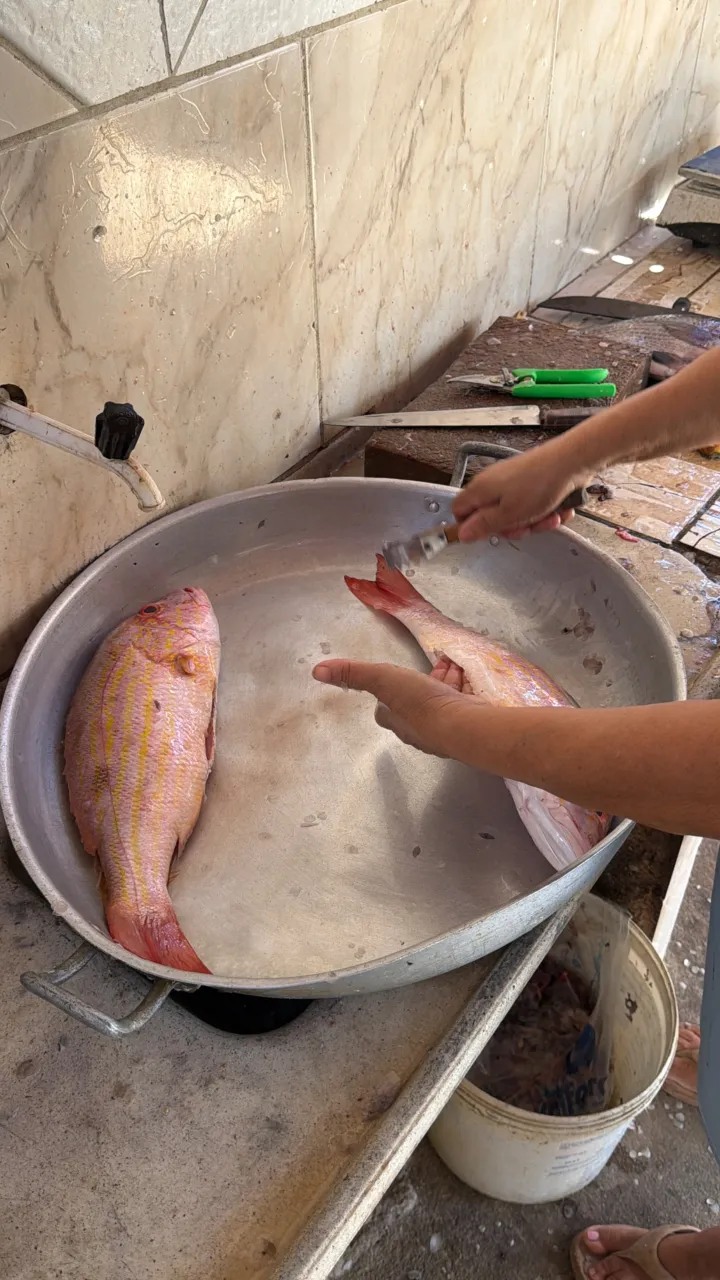
Biquara, the fish you see most
The biquara is a reef fish from the grunt family. A study published in 2013 in the *Brazilian Journal of Biology*, based on fish caught off Ceará with hook and line, says this family is the one most caught by the state's artisanal fishery by number of fish, and that the biquara alone makes up about 10% of all fish landed in Ceará.
The same study found that females spawn most between March and May. The researchers therefore recommended a closed season in those months and a minimum catch size of 18.5 cm. It is a scientific recommendation, not a rule in force; but if you buy biquara straight from a fisherman, choosing the larger fish helps the species.
On the Rio Jaguaribe side: shellfish and mangroves
Fortim also fishes the river. In the Jaguaribe estuary, fishermen and shellfish gatherers from Fortim and Aracati, many from quilombola communities such as Cumbe, collect oysters, sururu mussels, búzio clams and crabs from the mangrove. The Rio Jaguaribe mangroves are the nursery for much of this.
This fishing depends on the balance between fresh and salt water. In 2023, Brasil de Fato reported that heavy rain in March, more than 300 mm according to Funceme, turned the river fresh, killed shellfish and some of the fish and stopped fishing in the area for weeks. In other words, what is for sale changes with the season and the year, so ask what is available before planning your menu.
Where to buy fish straight from the fishermen
To watch the fishing, go to the beachfront at Pontal de Maceió early in the morning, when the jangadas head out and come back. It is the fishermen's workplace: ask before taking close-up photos. The artisanal fishing page tells the story of the jangadas and how to arrange a fishing trip.
To buy, the easiest option is Peixaria O Flávio, which sells fish, shrimp and lobster straight from the fishermen. Ask on WhatsApp what came in that day; the contact is on the Services page. Prices and choice change with the catch, so agree on them at the time.
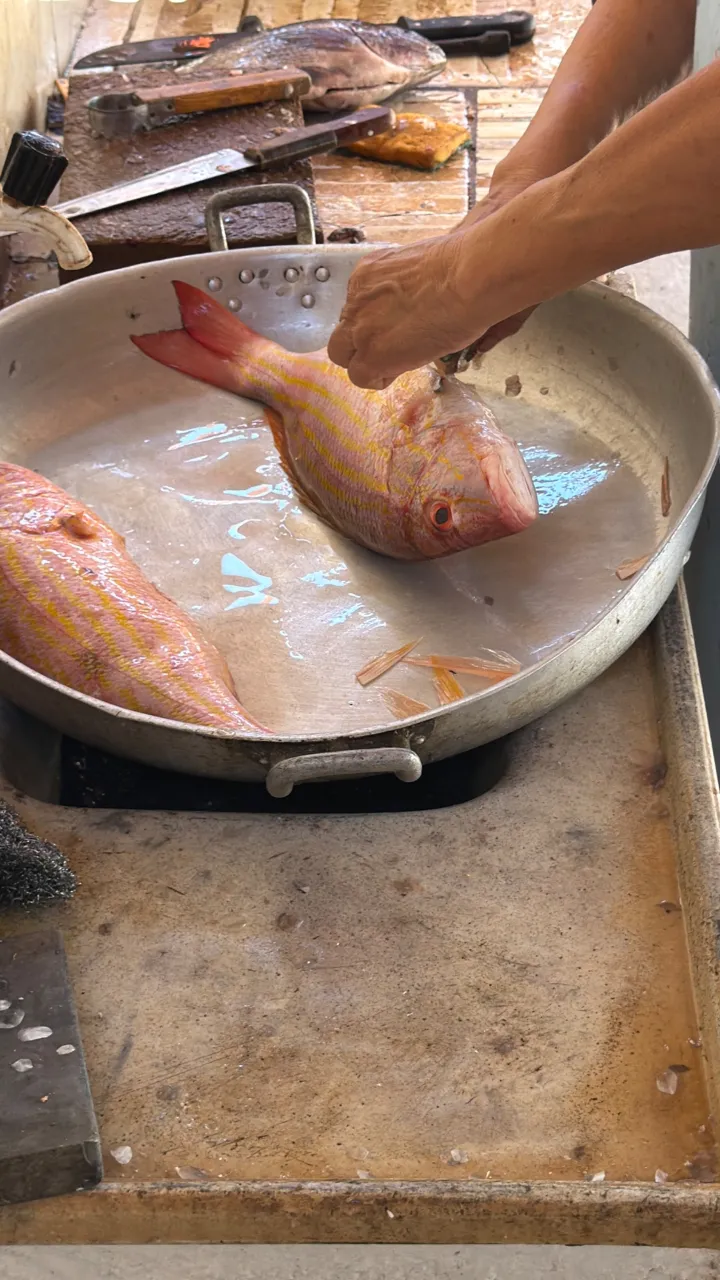
How to tell if a fish is fresh
The health surveillance office of Jundiaí (São Paulo state) published a simple guide for anyone buying fish, and it works on any beach. Before you take one, check:
- Smell: light, like sea air. A strong or sour smell is a bad sign.
- Eyes: bulging, with a clear cornea and a black, shiny pupil.
- Gills: pink, almost red, with no stains.
- Skin and scales: shiny skin with bright colour and scales firmly attached.
- Flesh: firm. Press it with a finger: if the mark stays, the fish is not good.
- Belly: the inner lining must stick to the flesh. If it comes away, do not buy it.
What to order in restaurants and how to cook it
If you just want to eat, fish is on many menus in town: peixada cearense (fish stewed with coconut milk, vegetables and egg, served with pirão), the fish caldeirada at Canto Verde, the seafood stew at Mariscada da Rivanda and the lobster at Maresia. Addresses are on the restaurants page, and the guide what to eat in Fortim explains the other coastal dishes.
If you prefer to cook, you need a place with a kitchen. In Barra do Fortim, the guesthouse Barra Beach House has chalets with a full kitchen, 300 m from Canto da Barra beach.
One thing to watch with lobster: from 1 February to 30 April its sale is banned in Brazil during the closed season, including in restaurants and beach stalls. Outside that period, ask the fish shop if they have any.
Frequently asked questions
Accommodation in
Fortim
From budget guesthouses to luxury eco resorts — Fortim has options for every profile and budget. Visit the official sites and book directly.
Barra Beach House
Jaguaribe Lodge
Vila Selvagem
Jaguarindia Village
Pausa Hotel
Recanto Beija Flor
Want to advertise in the Fortim guide?
Guesthouses, restaurants, buggy drivers and tours.
Your business can appear in this guide and be found by tourists from Brazil and abroad searching for things to do in Fortim. Leave your details and we will get back to you.
See also
Eating fish in Fortim?
See the restaurants in town and in Pontal, with contacts and opening hours.
See the restaurants