Wildlife You Can
See in Fortim
In Fortim you don't need to hike into the forest to see animals. Marmosets cross the branches of back gardens, noisy jays drop down to bird feeders and yellow-bellied birds keep watch from power lines. This guide covers the ones you're most likely to meet in Barra do Fortim, how to recognise each one, and the rule that applies to all of them: look closely, but don't touch or feed.
The common marmoset, a back-garden local
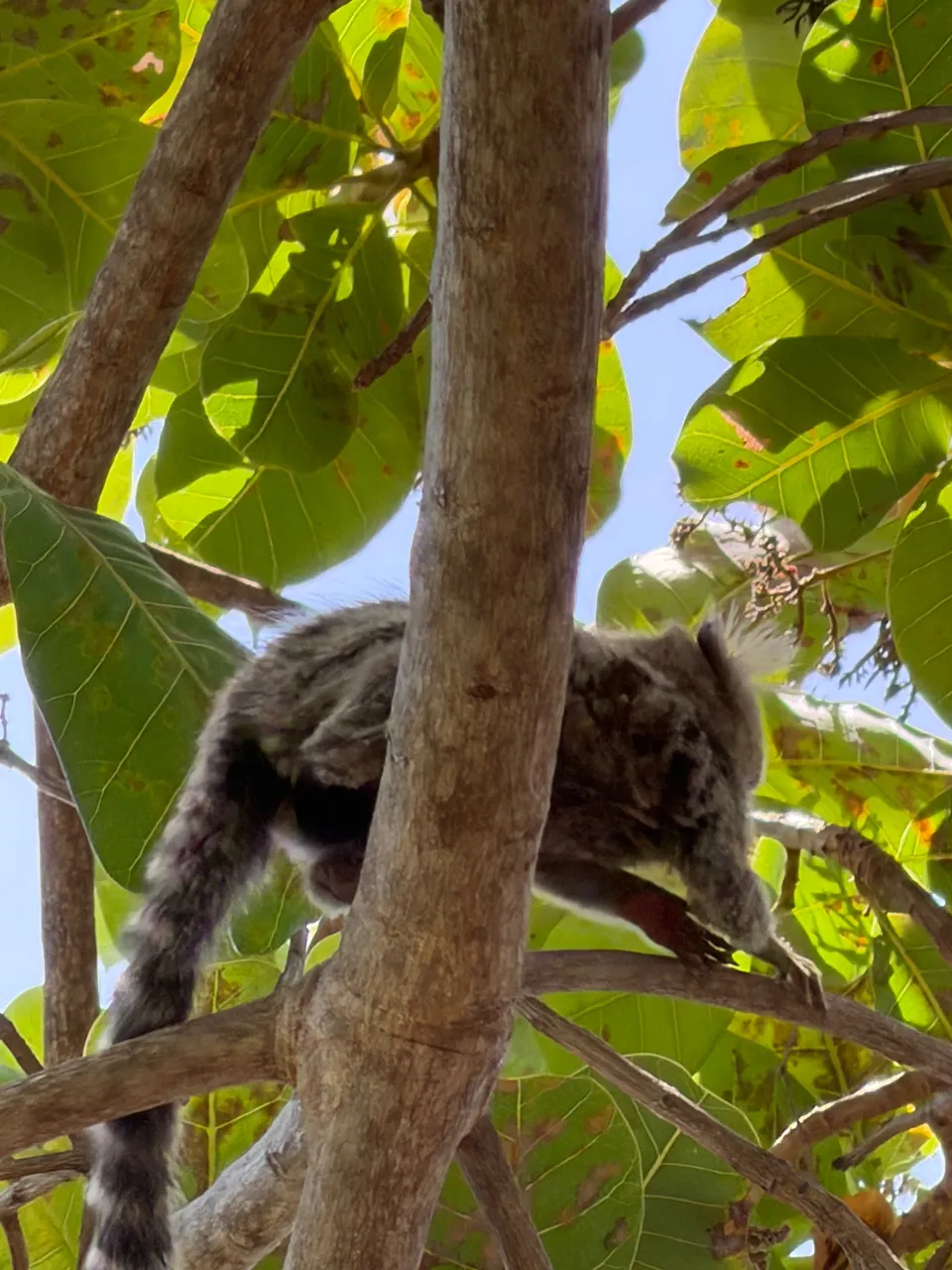
The animal that surprises most visitors to Fortim is the marmoset. The local species is *Callithrix jacchus*, the common or white-tufted-ear marmoset. In Portuguese it's called sagui, mico or mico-estrela, and in inland Ceará people call it soim. The white tufts sticking out of its ears are the easiest way to recognise it.
It belongs here: Ceará is part of the species' natural range, along with Piauí, Rio Grande do Norte, Paraíba, Pernambuco and Alagoas, according to Brazil's ICMBio. It lives in the Caatinga and in the Atlantic Forest of the Northeast, including coastal scrub, and adapts well to rural and urban areas. That's why it shows up so often in the trees around houses and guesthouses in Barra do Fortim.
It's small: a wild adult weighs around 300 grams. It lives in groups of usually 3 to 15 animals, about nine on average. When one crosses a branch, others almost always follow, one at a time, jumping from tree to tree.
Why you shouldn't feed the marmosets
Marmosets are cute and come close, and it's tempting to hold out a piece of fruit. Ceará's state health department asks for the opposite: avoid contact, don't feed them and don't pet them. As wild animals, marmosets can't be vaccinated, and they are one of the carriers of rabies in the state.
This isn't a theoretical risk. In February 2025 the newspaper O Povo reported a human rabies case in Jucás, inland Ceará, the seventh recorded in the state since 2008. The patient was the fifth in that period to catch the disease after a marmoset bite. A marmoset used to being fed loses its fear, gets closer and bites more easily.
If you are bitten or scratched, wash the area straight away with plenty of soap and water and go to the nearest health post. They will assess the case and give the vaccine and serum if needed. A marmoset acting strangely, or alone and away from its group, should be reported to the municipal health department.
The black-and-white jay with yellow eyes
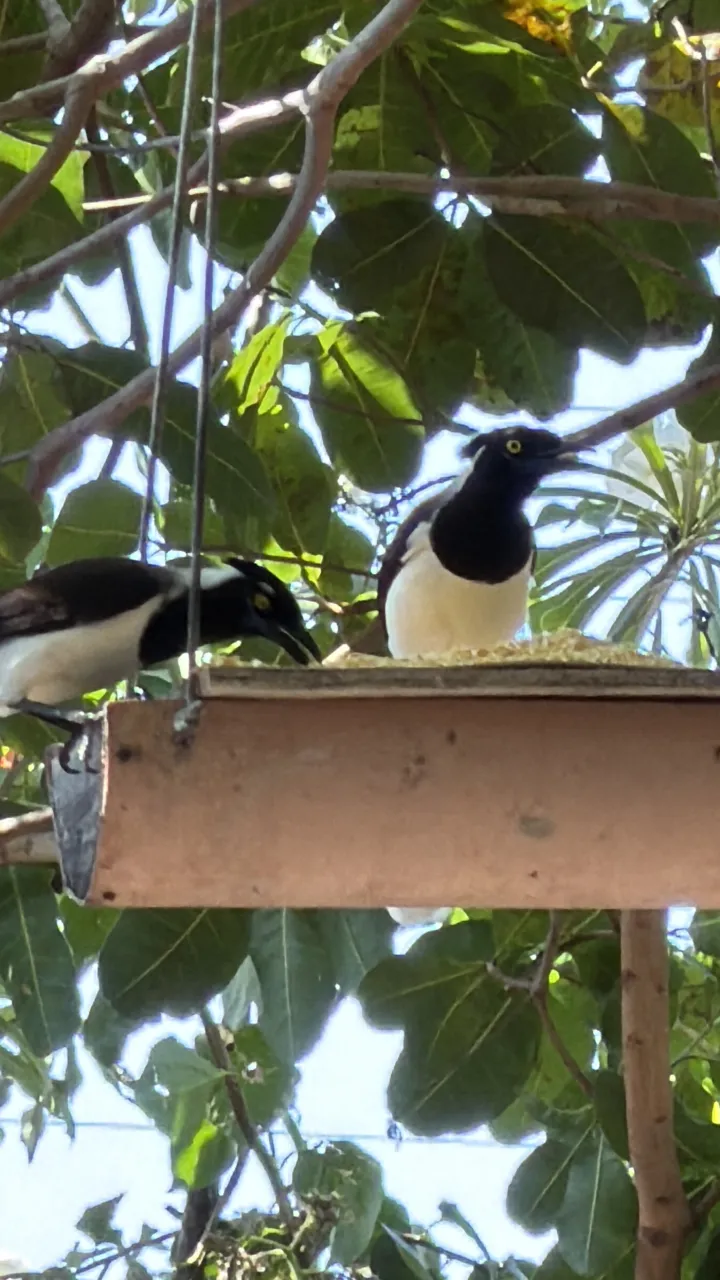
If two or three noisy birds land on a bird feeder, it's very likely the white-naped jay (*Cyanocorax cyanopogon*), known in Brazil as gralha-cancã or cancão. In photos taken in Barra do Fortim it shows a black head and breast, a white belly and bright yellow eyes. It belongs to the crow family.
This bird is found only in Brazil and is typical of the semi-arid Northeast, where it lives in the caatinga and in more open woodland. It eats almost anything: insects, animal feed when it finds some, even the fruit of the mandacaru cactus. Portuguese Wikipedia describes it as very curious and noisy, quick to raise the alarm when something unusual turns up, so you usually hear it before you see it.
Kingbirds on the wires and anis in flocks
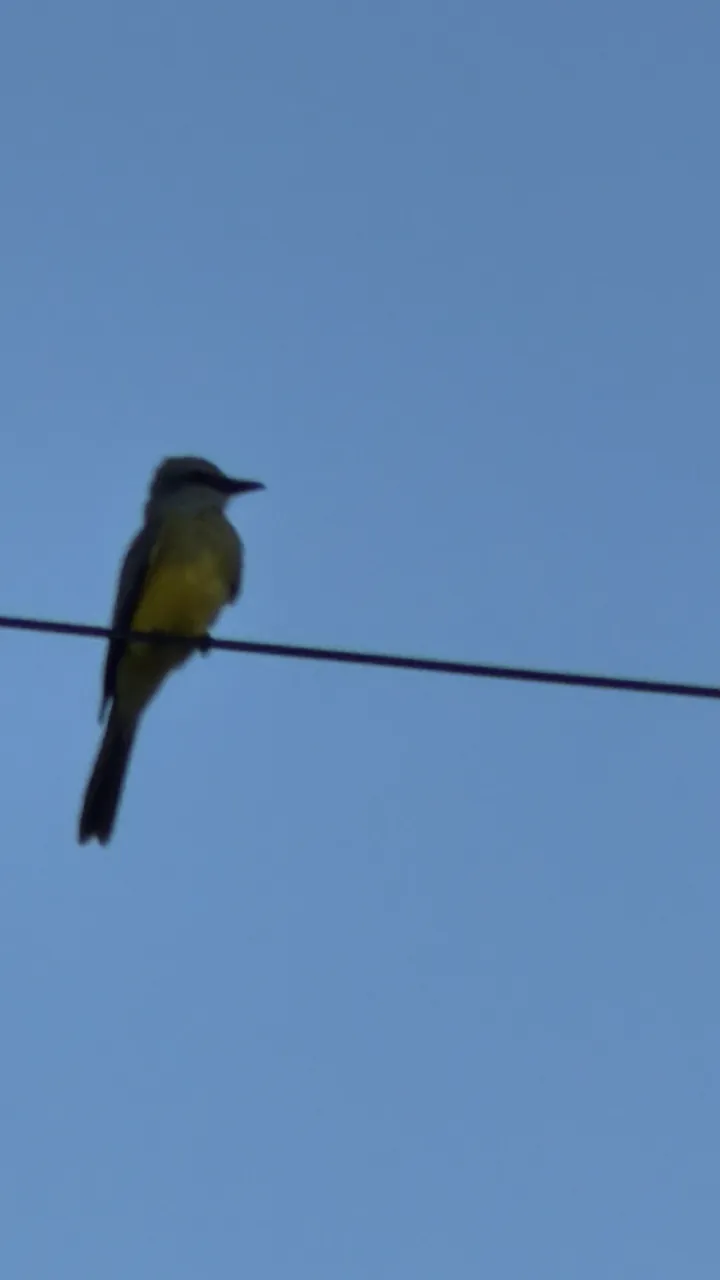
The small bird with a grey head and yellow belly that sits still on a wire or high branch, looking around, has every sign of a tropical kingbird (*Tyrannus melancholicus*). It lives in open areas with trees, gardens and roadsides, picks a high perch and makes quick flights to snatch insects in mid-air before returning.
Another bird that's easy to spot in open ground is the smooth-billed ani (*Crotophaga ani*): all black, with a long tail and a tall bill flattened at the sides. It moves in flocks of 6 to 15 birds, hunts grasshoppers and other insects on the ground, and likes to sun itself with spread wings after rain. Pairs sometimes share one nest and raise their young together.
Black birds come in several shapes around here, and not every one is an ani. If you can't see the bill and tail clearly, take a photo and check it later in a bird guide.
Praying mantises, wasps and the mangrove
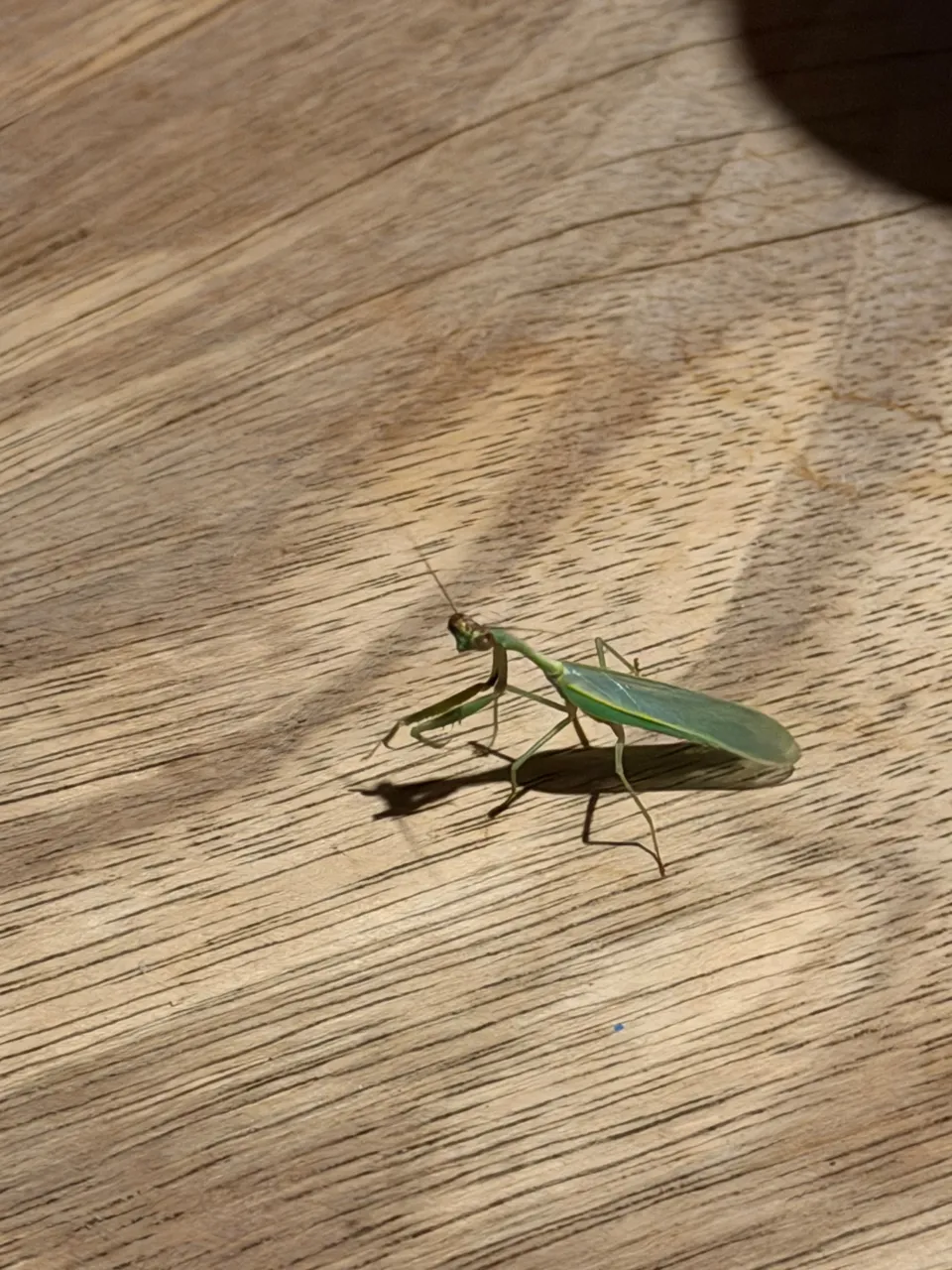
If you pay attention to the details, you'll find the small creatures too. Praying mantises turn up on tables, porches and plants, standing still with their front legs folded, and make great close-up photos. Wasps build nests hanging from leaves and eaves: look from a distance and leave them alone to avoid getting stung.
Near the river the wildlife changes. The Jaguaribe mangrove is home to the uçá crab and a nursery for fish and shrimp. That world has its own article: the one on the Rio Jaguaribe mangroves.
Tips for watching without disturbing
The photos in this article were taken in Fortim and are in the site's photo gallery. For more good spots for your camera, see the guide on where to take photos in Fortim.
- Go when it's cool: early morning and late afternoon let you sit and wait without baking in the sun.
- Look for trees and shade: the leafy gardens of Barra do Fortim hold much of the wildlife.
- Stay quiet and wait: each marmoset group lives in an area of just a few hectares, so it tends to pass through the same trees again.
- Zoom instead of approaching: use your phone's zoom or binoculars; don't chase or try to catch anything.
- No food: don't feed marmosets or wild birds, and never take an animal home.
Frequently asked questions
Accommodation in
Fortim
From budget guesthouses to luxury eco resorts — Fortim has options for every profile and budget. Visit the official sites and book directly.
Barra Beach House
Jaguaribe Lodge
Vila Selvagem
Jaguarindia Village
Pausa Hotel
Recanto Beija Flor
Want to advertise in the Fortim guide?
Guesthouses, restaurants, buggy drivers and tours.
Your business can appear in this guide and be found by tourists from Brazil and abroad searching for things to do in Fortim. Leave your details and we will get back to you.
See also
Want to see the river wildlife up close?
Fortim's boatmen take you along the Rio Jaguaribe, between the mangrove and the sandbanks.
See the tours